
Over the past three decades[1] members of the bench, bar, and legal academy have lamented the decline of professionalism among American lawyers.[2] The problems now perceived to plague our profession include:[3] that we, as lawyers, have lost an understanding of the practice of law as a “calling”;[4] That changes in the economics of the practice of law have transmuted our practice from a profession to a business;[5] that we have lost our way as independent intermediaries and counselors and, in so doing, have become “hired guns,” or “Rambos,” content merely to do our clients’ bidding;[6] and, finally, that the warm, collegial civility and camaraderie that lawyers once shared (or we think they shared) has been swallowed by an eat-or-be-eaten mentality.[7]
These malignancies, they say, are a cancer on our profession. Lawyers are increasingly disillusioned, clients dissatisfied, and the public disgusted. Because of this crisis, the public perception of lawyers continues to look for a bottom.[8] Where is Atticus Finch when the profession needs him?
In response to these widespread concerns, the profession has waged a multi-frontal crusade to improve professionalism in the practice of law. In addition to forming innumerable committees, the organized bar has conducted symposia,[9] adopted civility creeds,[10] offered continuing legal education programs,[11] and called upon American law schools to teach professionalism to law students.[12] Courts have adopted lawyer—and judge—civility codes and, perhaps most controversially, have implemented mandatory professionalism CLE requirements. For example, in 1997, the Louisiana Supreme Court amended its Rules for Continuing Legal Education[13] to require that every Louisiana lawyer attend at least one hour of professionalism CLE each year.[14]
In 2018, the LSBA distributed a “newly updated” Code of Professionalism. See LSBA Code of Professionalism (2018); see also Resolution Proposed by the Committee on the Profession to Amend Code of Professionalism (approved by LSBA House of Delegates on Jan. 20, 2018) (redline of changes). According to the LSBA, the Code, “[w]hile maintaining the basic principles set previously,” has “been brought into the 21st Century and addresses issues no one considered twenty-five years ago. It still embodies the basic tenets of professionalism and maintains a firm basis in our Bar’s motto: ‘Serving the Public and Serving the Profession.’” See Email from Barry H. Grodsky to LSBA Membership (Oct. 18, 2018).
The revised Code of Professionalism includes a new preface noting that the legal profession “is a learned calling,” and, as a result, lawyers “should act with honesty and integrity and be mindful” of their responsibilities to the judicial system, the public, each other, and the rule of law. Id. The amendments also include “I will” pledges encouraging lawyers to do various things, including the following:
- To act with “fairness” and to refrain from engaging in “any demeaning or derogatory actions or commentary toward others.”
- To “cooperate with other counsel in all respects.”
- To work “to protect and improve” the image of the profession, and the system of justice.
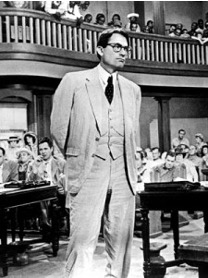
- To use “technology, including social media, responsibly.”[15]
- To speak and act in a manner reflecting “the professionalism expected of me as a lawyer.”
- To seek to serve the bench, the bar, and the indigent.
- To support new members in the profession.
- To keep up to date on “changes in the law, communication, and technology which affect the practice of law.”[16]
Various professionalism codes, creeds, oaths, and the CLE requirements affecting Louisiana lawyers, are collected in this section.
The Louisiana Lawyers’ Oath
I solemnly swear (or affirm) I will support the Constitution of the United States and the Constitution of the State of Louisiana;
I will maintain the respect due to courts of justice and judicial officers;
I will not counsel or maintain any suit or proceeding which shall appear to me to be unjust, nor any defense except such as I believe to be honestly debatable under the law of the land;
I will employ for the purpose of maintaining the causes confided to me such means only as are consistent with truth and honor, and will never seek to mislead the judge or jury by any artifice or false statement of fact or law;
I will maintain the confidence and preserve inviolate the secrets of my client, and will accept no compensation in connection with a client’s business except from the client or with the client’s knowledge and approval;
To opposing parties and their counsel, I pledge fairness, integrity, and civility, not only in court, but also in all written and oral communications;
I will abstain from all offensive personality, and advance no fact prejudicial to the honor or reputation of a party or witness, unless required by the justice of the cause with which I am charged;
I will never reject, from any consideration personal to myself, the cause of the defenseless or oppressed, or delay any person’s cause for lucre or malice.
So help me God.
Louisiana State Bar Association Code of Professionalism (2018)
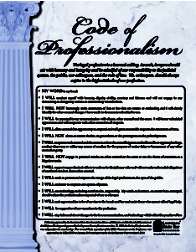
The legal profession is a learned calling. As such, lawyers should act with honesty and integrity and be mindful of our
responsibility to the judicial system, the public, our colleagues, and the rule of law. We, as lawyers, should always aspire to the highest ideals of our profession.
- My word is my bond.
- I will conduct myself with honesty, dignity, civility, courtesy and fairness and will not engage in any demeaning or derogatory actions or commentary toward others.
- I will not knowingly make statements of fact or law that are untrue or misleading and I will clearly identify for other counsel changes I have made in documents submitted to me.
- I will be punctual in my communication with clients, other counsel and the court. I will honor scheduled appearances and will cooperate with other counsel in all respects.
- I will allow counsel fair opportunity to respond and will grant reasonable requests for extensions of time.
- I will not abuse or misuse the law, its procedures or the participants in the judicial process.
- I will cooperate with counsel and the court to reduce the cost of litigation and will not file or oppose pleadings, conduct discovery or utilize any course of conduct for the purpose of undue delay or harassment of any other counsel or party.
- I will not engage in personal attacks on other counsel or the court or use the threat of sanctions as a litigation tactic.
- I will support my profession’s efforts to enforce its disciplinary rules and will not make unfounded allegations of unethical conduct about other counsel.
- I will work to protect and improve the image of the legal profession in the eyes of the public.
- I will endeavor to improve our system of justice.
- I will use technology, including social media, responsibly. My words and actions, no matter how conveyed, should reflect the professionalism expected of me as a lawyer.
- I will seek opportunities to be of service to the bench and bar and assist those who cannot afford legal help.
- I will be supportive of new members in the profession.
- I will stay informed about changes in the law, communication, and technology which affect the practice of law.
Louisiana Supreme Court Rules Relating to Litigation Conduct in Louisiana Courts (1997)
Preamble
The following standards are designed to encourage us, the judges and lawyers, to meet our obligations to each other, to litigants and to the system of justice, and thereby achieve the twin goals of professionalism and civility, both of which are hallmarks of a learned profession dedicated to public service.
These standards shall not be used as a basis for litigation or sanctions or penalties. Nothing in these standards alters or detracts from existing disciplinary codes or alters the existing standards of conduct against which judicial or lawyer negligence may be determined.
However, these standards should be reviewed and followed by all judges of the State of Louisiana. Copies may be made available to clients to reinforce our obligation to maintain and foster these standards.
Judges’ Duties To The Courts
We will be courteous, respectful, and civil to lawyers, parties, and witnesses. We will maintain control of the proceedings, recognizing that judges have both the obligation and authority to insure that all litigation proceedings are conducted in a civil manner.
We will not employ hostile, demeaning, or humiliating words in opinions or in written or oral communications with lawyers, parties, or witnesses.
We will be punctual in convening all hearings, meetings, and conferences; if delayed, we will notify counsel, if possible.
We will be considerate of time schedules of lawyers, parties, and witnesses in scheduling all hearings, meetings and conferences.
We will make all reasonable efforts to decide promptly all matters presented to us for decision.
We will give the issues in controversy deliberate, impartial, and studied analysis and consideration.
While endeavoring to resolve disputes efficiently, we will be considerate of the time constraints and pressures imposed on lawyers by the exigencies of litigation practice.
We recognize that a lawyer has a right and a duty to present a cause fully and properly, and that a litigant has a right to a fair and impartial hearing. Within the practical limits of time, we will allow lawyers to present proper arguments and to make a complete and accurate record.
We will not impugn the integrity or professionalism of any lawyer on the basis of clients whom or the causes which a lawyer represents.
We will do our best to insure that court personnel act civilly toward lawyers, parties, and witnesses.
We will not adopt procedures that needlessly increase litigation expense.
We will bring to lawyers’ attention uncivil conduct which we observe.
We will be courteous, respectful, and civil in opinions, ever mindful that a position articulated by another judge is the result of that judge’s earnest effort to interpret the law and the facts correctly.
We will abstain from disparaging personal remarks or criticisms, or sarcastic or demeaning comments about another judge in all written and oral communications.
We will endeavor to work with other judges in an effort to foster a spirit of cooperation in our mutual goal of enhancing the administration of justice.
Lawyers’ Duties To The Courts
We will speak and write civilly and respectfully in all communications with the court.
We will be punctual and prepared for all court appearances so that all hearings, conferences, and trials may commence on time; if delayed, we will notify the court and counsel, if possible.
We will be considerate of the time constraints and pressures on the court and court staff inherent in their efforts to administer justice.
We will not engage in any conduct that brings disorder or disruption to the courtroom.
We will advise our clients and witnesses appearing in court of the proper conduct expected and required there and, to the best of our ability, prevent our clients and wit nesses from creating disorder or disruption.
We will not knowingly misrepresent, mischaracterize, misquote, or miscite facts or authorities in any oral or written communication to the court.
We will not engage in ex parte communication on any pending action.
We will attempt to verify the availability of necessary participants and witnesses before dates for hearings or trials are set, or if that is not feasible, immediately after such date has been set so we can promptly notify the court of any likely problems.
We will act and speak civilly to court marshals, clerks, court reporters, secretaries, and law clerks with an awareness that they too, are an integral part of the judicial system.
Notes
This page was last updated October 2026.
[1] Excerpted from Dane S. Ciolino, Redefining Professionalism as Seeking, 49 Loy. L. Rev. 229, 229-31 (2003).
[2] See, e.g., Warren E. Burger, The Decline in Professionalism, 61 Tenn. L. Rev. 1 (1993); see generally Mary Ann Glendon, A Nation Under Lawyers: How the Crisis in the Legal Profession is Transforming American Society (1994); Anthony T. Kronman, The Lost Lawyer: Failing Ideals of the Legal Profession (1993); Sol M. Linowitz & Martin Mayer, The Betrayed Profession: Lawyering at the End of the Twentieth Century (1994); see also Samuel J. Levine, Essay, Faith in Legal Professionalism: Believers and Heretics, 61 Md. L. Rev. 217 (2002); Therese Maynard, Teaching Professionalism: The Lawyer as Professional, 34 Ga. L. Rev. 895, 895 n. 2 (2000) (“[t]he literature teems with articles that describe, often in rather distressing terms, the crisis within the legal profession today”); Fred C. Zacharias, Reconciling Professionalism and Client Interests, 36 Wm. & Mary L. Rev. 1303, 1307 (1995) (“[o]ver the past two decades, hundreds of articles and speeches have focused on the meaning of professionalism, its perceived ‘decline,’ and steps the bar should take to improve it”).
[3] Some also have expressed concerns about the general competency of lawyers and their compliance with disciplinary codes. SeeA.B.A., Final Report and Recommendations of the Task Force on Professional Competence (1983). But this is more a matter of “legal ethics” than “professionalism.”
[4] See Phoebe A. Haddon, Education for a Public Calling in the 21st Century, 69 Wash. L. Rev. 573 (1994).
[5] See, e.g., Wm. Reece Smith, Jr., Teaching and Learning Professionalism, 32 Wake Forest L. Rev. 613, 613 (1997); Eleanor W. Myers, “Simple Truths” About Moral Education, 45 Am. U.L. Rev. 823, 827 (1996); Norman Bowie, The Law: From a Profession to a Business, 47 Vand. L. Rev. 741 (1988).
[6] See Robert F. Cochran, Jr., Professionalism in the Postmodern Age: Its Death, Attempts at Resuscitation, and Alternate Sources of Virtue, 14 Notre Dame J.L. Ethics & Pub. Pol’y 305, 311-13 (2000); Margaret Ann Wilkinson, Peter Mercer & Terra Strong, Mentor, Mercenary or Melding: An Empirical Inquiry into the Role of the Lawyer, 28 Loy. U. Chi. L.J. 373 (1996); David Luban, The Noblesse Oblige Tradition in the Practice of Law, 41 Vand. L. Rev. 717 (1988).
[7] See E. Norman Veasey, Rambo Be Gone, 4 Bus. Law Today 12 (Jan/Feb 1995); N. Gregory Smith, Ethics v. Professionalism and the Louisiana Supreme Court, 58 La. L. Rev. 539, 541 (1998) (noting that bar journals, legal periodicals and discussions with practitioners “reveal that incivility and unprofessional conduct are far more pervasive than lawyer incompetency or dishonesty.”).
[8] See, e.g., Erica Moeser, Standards, Change, Politics, and the Millennium, 28 Loy. U. Chi. L.J. 229, 230 (1996).
[9] See, e.g., A.B.A., Teaching and Learning Professionalism: Symposium Proceedings (1996); A.B.A., Teaching and Learning Professionalism: Report of the Professionalism Committee (1996).
[10] More than 100 county, city and state bar associations, and many federal courts, have adopted civility codes. See, e.g., Allen K. Harris, The Professionalism Crisis: The “Z” Words and Other Rambo Tactics, 53 S.C. L. Rev. 549, 582-83 (2002).
[11] See, e.g., Joryn Jenkins, Teaching and Learning Professionalism, Fed. Lawyer, Aug. 1997, at 6 (discussing “The Florida Lawyers Ethics School”).
[12] See A.B.A. Report on Teaching and Learning Professionalism, supra, at 13-25 (“Law School Professionalism Training”).
[13] See Smith, Ethics v. Professionalism, supra, at 544-47 (discussing the new rule).
[14] Louisiana Supreme Court has revised this rule providing that lawyers who turn 65 on or after January 1, 2026 will be required to complete five hours of CLE each year, including one hour of ethics and one hour of professionalism, until they reach age 75. Attorneys who attain age 75 are fully exempt from MCLE requirements. See La. State Bar Ass’n, Louisiana Supreme Court Revises MCLE Age-Based Exemption Effective Jan. 1, 2026, https://www.lsba.org/NewsArticle.aspx?Article=7a84c10d-834d-4faa-9228-b09c9ca2c890 (last visited July 16, 2026).
[15] In 2025, the Louisiana Supreme Court Technology Commission issued generative artificial intelligence guidelines explaining that lawyers remain responsible for the accuracy of filings. These guidelines emphasize human oversight and professional judgment. See generally La. Sup. Ct. Tech. Comm’n, Generative AI Guidelines (2025).
[16] Courts have required lawyers to complete legal education on generative AI as a sanction for the improper use of AI in litigation. See Woodward Harbor L.L.C. v. City of Mandeville, No. 23-5824, 2026 LEXIS 133231 (E.D. La. Mar. 5, 2026) (sanctioning and ordering an attorney to attend continuing legal education on the topic of generative AI after signing and filing a written opposition that contained hallucinated case citations, incorrect quotations, and false summaries of cases and legal rules).
Professionalism Resources
General
Dane S. Ciolino, Redefining Professionalism as Seeking, 49 Loy. L. Rev. 229 (2003).
Louisiana
- Louisiana Supreme Court Rules Relating to Litigation Conduct in Louisiana Courts.
- LSBA Committee on the Profession Website.
- LSBA Code of Professionalism.
- Louisiana Association for Justice Lawyer’s Creed.